When it comes to wellbeing, what works for one person may not work for another. Ayurveda sees each person as a unique blend of Vata, Pitta and Kapha—the three mind-body energies believed to influence your digestion, sleep, stress response and even the types of exercise that may suit you best. Understanding your dosha is the first step towards creating a wellness routine that fits you, rather than following a one-size-fits-all approach.
Why One-Size-Fits-All Wellness May Not Work
Have you ever tried a popular wellness trend—such as ice baths, smoothie cleanses or 5am high-intensity workouts—only to feel exhausted, bloated or anxious while your friend thrives on the exact same routine?
The modern wellness industry often promotes standardised solutions, but everybody is different. Ayurveda, a traditional Indian system of medicine with roots dating back thousands of years, offers another perspective: no two mind-body constitutions are exactly alike.
What supports one person may not work for another. Rather than simply following the latest trend, Ayurveda encourages you to understand your unique constitution and balance of doshas.
The Building Blocks: Understanding the Three Doshas
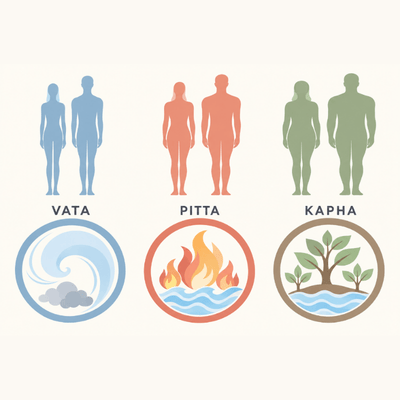
In Ayurvedic philosophy, everything in nature—including the human body—is understood to be made up of five basic elements, known as the Pancha Mahabhutas: ether, air, fire, water and earth. These elements combine to form three mind-body energies known as doshas.
Everyone is believed to be born with a unique balance of all three doshas, which forms their natural constitution, or Prakriti. Over time, factors such as lifestyle, stress, diet and climate can cause this balance to shift, leading to a temporary state of imbalance known as Vikriti.
1. Vata Dosha (Air + Ether): The Energy of Movement
In Ayurveda, Vata is associated with movement in the body, including circulation, breathing, nerve activity and digestion.
- Common physical characteristics: Lean frame, dry skin, cold hands and feet, flexible joints and a variable appetite.
- When balanced: Creative, energetic, quick-thinking, adaptable and enthusiastic.
- When imbalanced: Racing thoughts, restlessness, difficulty sleeping, bloating, constipation and dry skin.
- Recommended movement: Grounding, rhythmic and warming activities such as slow-flow yoga, Pilates, steady-paced strength training and mindful walking. Highly intense or high-impact workouts may feel overstimulating.
2. Pitta Dosha (Fire + Water): The Energy of Transformation
In Ayurveda, Pitta is associated with digestion, metabolism, body temperature and mental focus.
- Common physical characteristics: Medium or athletic build, warm body temperature, strong appetite and sensitive or flushed skin.
- When balanced: Decisive, articulate, focused, courageous and a natural leader.
- When imbalanced: Irritability, frustration, burnout, acid reflux, skin sensitivity and excessive body heat.
- Recommended movement: Moderate, cooling and non-competitive activities such as swimming, evening cycling, strength training with controlled breathing and outdoor trail walks.
3. Kapha Dosha (Earth + Water): The Energy of Structure
In Ayurveda, Kapha is associated with physical structure, lubrication, fluid balance, immunity and emotional stability.
- Common physical characteristics: Sturdy or broad frame, strong bone structure, thick hair, smooth skin and steady energy.
- When balanced: Calm, compassionate, grounded, resilient, patient and supportive.
- When imbalanced: Sluggishness, weight or water retention, excessive sleepiness, brain fog and difficulty letting go.
- Recommended movement: Dynamic, invigorating and energetic activities such as spin classes, brisk cardio, kettlebell circuits and active vinyasa yoga to encourage movement and circulation.
The Four Core Pillars Influenced by Your Dosha
|
Pillar
|
Vata Type
|
Pitta Type
|
Kapha Type
|
|
Digestion (Agni)
|
Irregular (Vishama): Alternates between fast and slow; prone to bloating.
|
Sharp (Tikshna): Strong appetite; prone to acidity/heartburn if meals are missed.
|
Slow (Manda): Heaviness post-meals; slow metabolic processing.
|
|
Sleep Quality
|
Light, easily disrupted; tendency to wake between 2:00 AM – 4:00 AM.
|
Sound but short; night-owl tendencies; vivid or work-related dreams.
|
Deep, heavy, and prolonged; difficulty waking up early.
|
|
Stress Response
|
Anxiety, fear, overthinking, feeling overwhelmed.
|
Frustration, impatience, anger, hyper-competitiveness.
|
Withdrawal, avoidance, resistance to change, complacency.
|
|
Exercise Needs
|
Warm, grounding, slow, stability-focused.
|
Cooling, relaxed, non-competitive, structured.
|
Vigorous, sweat-inducing, fast-paced, invigorating.
|
Why Online Quizzes May Not Tell the Whole Story
While online questionnaires can be a fun introduction to Ayurveda, they may not provide a complete picture of your constitution. Many generic quizzes reflect your current state, or Vikriti, rather than your underlying natural constitution, known as Prakriti. For example, someone with a naturally Kapha-dominant constitution who is experiencing a period of high stress and restlessness may receive a Vata-dominant result. Following recommendations based solely on that result could overlook their underlying constitution and broader lifestyle needs.
Discover Your Ayurvedic Constitution with Bhupinder
An Ayurvedic health consultation goes beyond a simple checklist. Through traditional assessment methods—including pulse assessment, physical observations, an evaluation of your digestion and a review of your lifestyle. Founder of House of Hale and Ayurvedic Therapist, Bhupinder, develops a fuller understanding of your constitution and current state according to Ayurvedic principles.
What You Can Gain from a Consultation
- A clearer understanding of your Prakriti and Vikriti: Learn more about your natural constitution and how it may differ from your current state.
- Personalised dietary guidance: Explore food choices, spices and meal timings that may support your digestion and suit your lifestyle.
- Tailored movement and recovery recommendations: Discover an approach to exercise and rest suited to your current energy levels and recovery needs.
- Personalised botanical and herbal guidance: Where appropriate, receive recommendations intended to support your general wellbeing.
Discover a more personalised approach to wellbeing that considers your body, mind and lifestyle.
The information in this article is for educational purposes only and is based on traditional Ayurvedic principles. It is not intended as a substitute for professional medical advice, diagnosis, or treatment.
Featured Contributor:
House of Hale
House of Hale is a Singapore-based holistic wellness brand rooted in the ancient science of Ayurveda. Designed specifically for modern urban living, House of Hale provides personalised consultations, lifestyle guidance and therapies for stress management, metabolic balance, gut restoration, and skin vitality. We believe true health is not a one-size-fits-all formula, but an individualised state of harmony between body, mind, and environment. At House of Hale, we empower you to reclaim your natural vitality and live a balanced, vibrant life.
Connect with House of Hales on their website and LinkedIn.